 12/12/2025 – 17/01/2026
An exhibition by Òscar Clarissó_Sepulcrito
Opening December 12th at 7 p.m.
Sweet Wrecker is part of the collaboration programme between the ACVIC Centre d’Arts Contemporànies and the Sala d'Art Jove
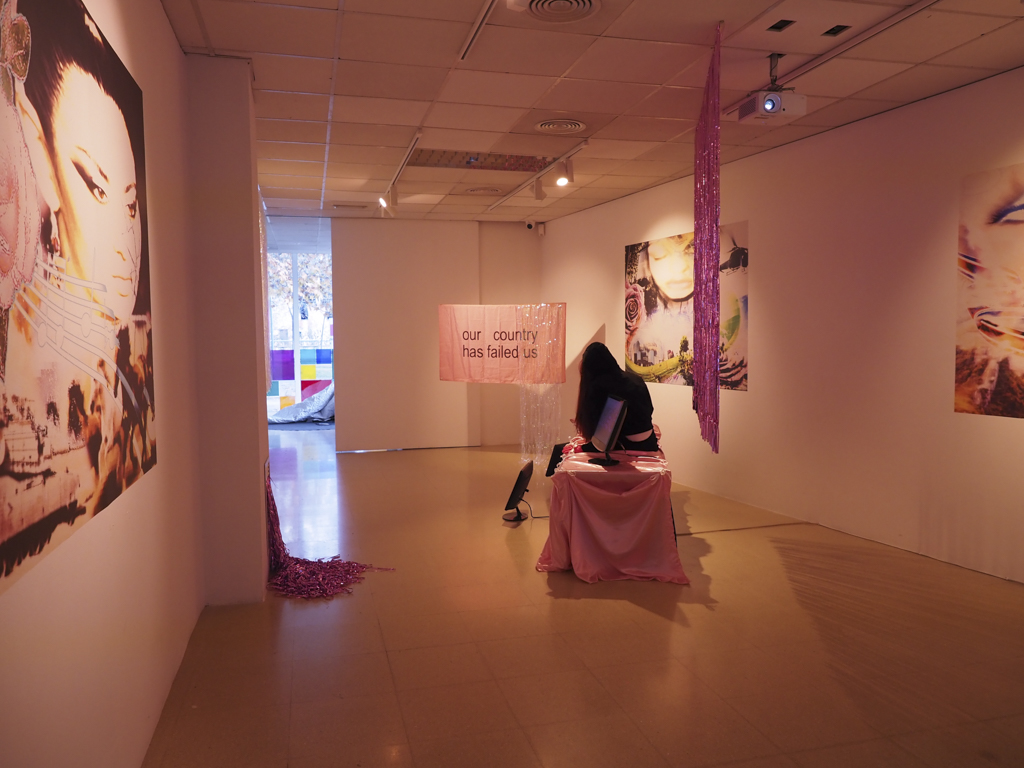
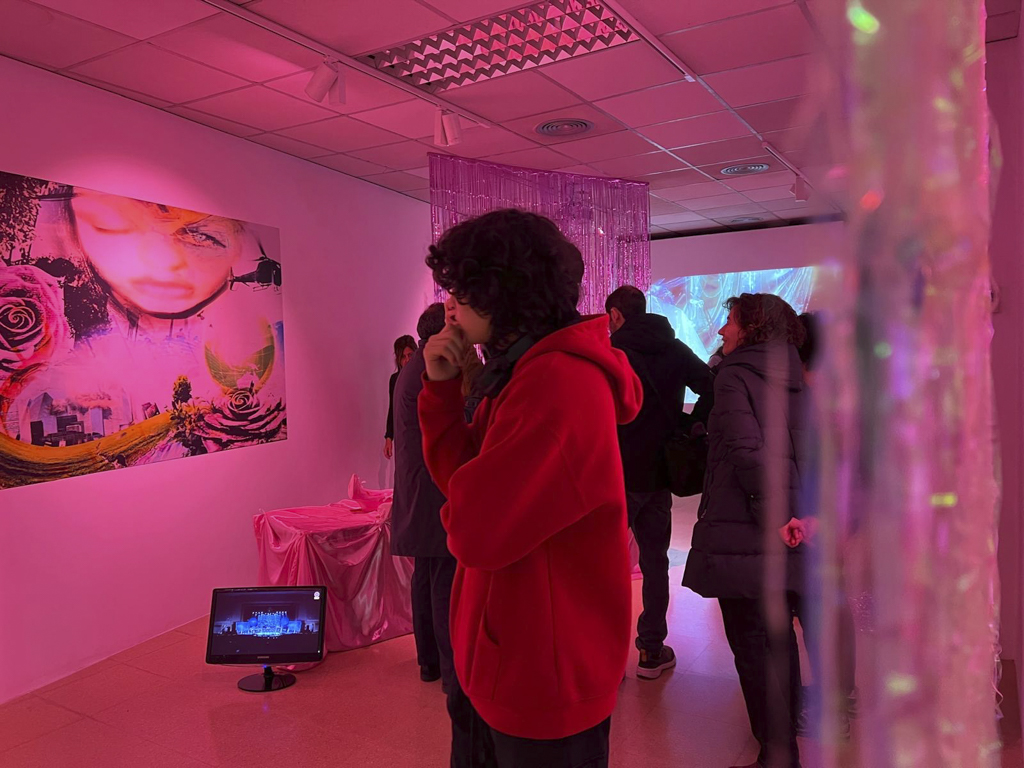
This project is a crack in a device of latent algorithms, a manifesto in which the affective mechanisms of power and pop culture —as a massive and spectacularised artefact— can become an instrument of emotional and collective discipline.
In a virtual journey during a few hours of deranged scrolling from my alter ego account @sepulcrito, I discovered the Moranbong Band, a girl band created by the North Korean regime of Kim Jong-un to manufacture ideological adhesion through a synthesis between epicness, pop, and the figure of the diva as heroine and motherland. In them, pop becomes a state device: a language capable of encoding collective identity, homeland, and love for the dictator.
It was at that moment when a door opened upon a fascination with the historical orgy in which pop culture and political artefacts have always been found. In this ambiguous territory, the homeland and the diva share the same symbolic architecture; a spectacularised leadership, bodies seeking salvation, images which command affection, and a mass which finds belonging in proclamations. Ideology is incarnated. It is at this point that the specification of Sweet Wrecker comes into play, a character who inhabits the space in which the conversation among pop, virtual coding, and the political machinery of control becomes real. The body ceases to be an individual and becomes an interface, an expanded organ in which algorithms and aesthetic strategy resonate.
A performative attack is created by a process of documentation and codification of movements generated by first year high school students from the Escola d'Art de Vic, highlighting the fragility of the notion of collectivity. Sweet Wrecker acts as a matrix of order, of aesthetics as a political establishment, of post-femininity as a redoubt, and with the internet as its homeland. This scenographic device reveals the ways in which the aesthetic resources of pop have an emancipatory and counter-revolutionary political capacity; a capacity necessary at a time when the absence of an identity and collective notion is evident.
Sweet Wrecker stands as a testing ground for thinking about pop as a contemporary political ritual, a space in which aesthetics is depth, in which symbol is community, and in which the body does not obey, but rather speculates. Here, the collective is a wound and a promise, a place in which promise is uninhabited.
Òscar Clarissó_Sepulcrito